
Many people who come into the board gaming hobby run into one terrifying brick wall. It’s the same brick wall that everyone new to a hobby, industry sector, or niche interest comes up against at some point, usually near the outset. The brick wall is made of obscure words and jargon terms and shibboleths that people in that hobby know and use all the time. And it can be mystifying, off-putting, and downright annoying when nobody bothers to explain something everyone else seems to understand. “Oh, this game is an engine builder with deck-building elements,” they say off-handedly and you want to smack the proverbial “they” with a large fish.
Jargon isn’t all bad, of course, because these words exist as a shorthand for people to talk about their interests quickly and with shared understanding of the subject.
This article is the first in a new series, which exists purely as a wrecking ball to that edifice of obscure verbiage. If we’ve missed any words out, leave a message in the comments and we’ll amend the article post-haste!
Links to all of the entries below.
1 vs many
A game that is described as “1 vs many” is one where one player is an adversary to the rest of the players. In the most common variation, the “many” (2+) players work cooperatively to defeat the single adversary. In other types, the adversary acts as the storyteller or controller of every villain in the game.
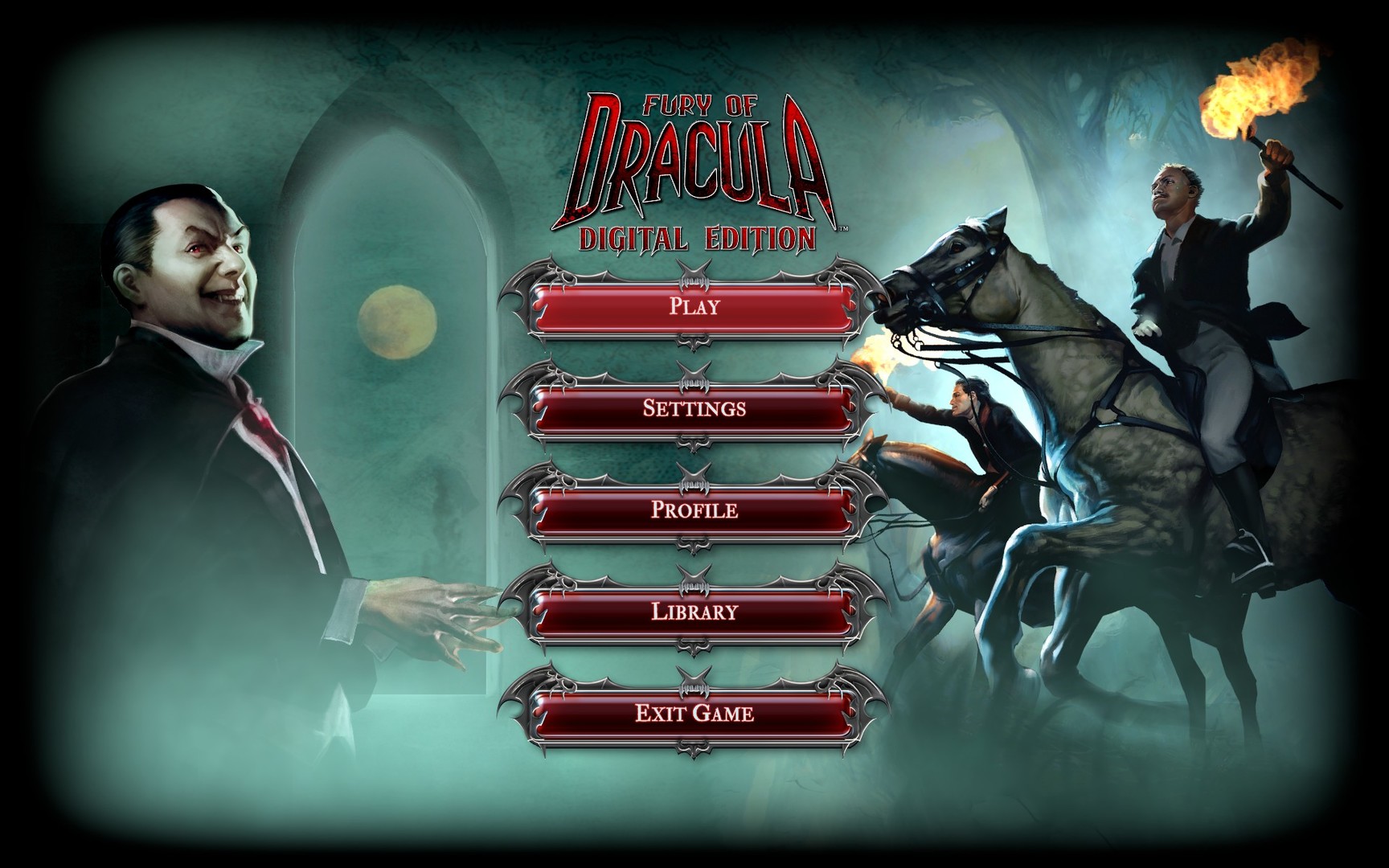
An example of the former type is Fury of Dracula, currently in its fourth edition. In this game, one player takes on the role of Dracula himself, attempting to evade the remaining players. The other players take the parts of Van Helsing, the Harkers (Jonathan and Mina), and Lord Godalming as they in turn attempt to defeat the monster. The latter type is well-typified in Descent: Journeys in the Dark. Other examples are Betrayal at House on the Hill and Letters from Whitechapel.
18XX
18XX refers to a type of game that shares a theme of managing railway companies. The games are mostly economic in nature; players trade stocks and commodities in railway companies rather than managing the actual day-to-day running of a train company. Although the games are typically set in the 1800s, the setting can be any milieu that the game designer sees fit. The most popular example of this game is 1830: Railways and Robber Barons.
:strip_icc()/pic882119.jpg)
Photo by Aingeru Malkav.
4X
4X games are all based on the concept of eXplore, eXpand, eXploit, and eXterminate. This means that the game features a large map to explore and uncover; territory you control and can explore and expand into; resources to exploit to build armies and buildings; and the chance to exterminate your opponents on the map, ensuring your victory. Although some 4X games have a system of points to determine the winner, many simply declare the winner as the player left on the map after the aforementioned “exterminate” part. One of the most well-known and beloved 4X games is Twilight Imperium, which sees you attempting to dominate the galaxy through whichever means you see fit. Other 4X games include Scythe and Eclipse: Second Dawn for the Galaxy.

Abstract game
Abstract games usually have no particular theme to guide play and the mechanics (q.v.[1]), tactics (q.v.), and strategies (also q.v.) are the key attractions. If there is a theme, it’s usually there as artistic representation and not because it makes any sense to the rest of the game. The most common example of this game is checkers, because the pieces don’t represent any particular thing: they just are. The tactical positioning and capturing is what’s important. Many older games are of this variety, including Go, Othello, and chess, but there are many modern varieties from the bizarrely-named YINSH to Onitama to Hive.
Action selection
Action selection mechanics give players a number of choices from a set number of actions, usually printed on a player board in front of them. This differs from worker placement (q.v.) in that one player’s selection does not block or prevent other players from performing their own actions. The player can’t take the same action in two consecutive turns (i.e., in the next round they need to choose a different action than what they chose the previous round).
Some action selection games have players performing the action selection in private, and the unpredictability of players’ choices drives any kind of obstruction. An example of this would be Gloomhaven by designer Isaac Childres, a dungeon crawler (q.v.) game in which players select their actions from a hand of cards. Players cannot state exactly what they plan to do and when during the turn it will take effect, so other players may need to plan or restructure their turns around any unintended actions.
Other action selection games make all actions available at all times, but weaken the action that was just taken to encourage players to do different things every round. Ark Nova by Mathias Wigge is a game in which players are creating and curating their own zoo, and it uses this method of action selection. The cards with the actions are arranged in a numbered row below the player board, but the “strength” of the action is determined by its placement in the row, and when you take an action, you move that action card to the far left into spot number one, thus weakening it.
:strip_icc()/pic6293412.jpg "Click to enlarge")
A.I.
No, not the computer technology, but a term used to describe a particular method to simulate an intelligent opponent for players in solo games (q.v.). A fancier way to express this would be, “creating a series of simulated decision points for a simulated, automated player”. Most AIs use a set of cards to simulate the random decision-making process a human opponent might follow, with each card serving as a kind of shorthand for a complex series of decisions you need to make on behalf of your imaginary opponent.
The cards often include simple (although often obscure) iconography that detail a series of actions the solo player needs to perform; learning the iconography is often its own challenge. To combat this, some fans have written fantastic web apps that simulate the simulation, spitting out the output for you so that you don’t have to decode the icons and check the game states to arrive at the opponent’s movement on the board. AIs were popularized in the Tuscany expansion for the game Viticulture, which introduced solo mode cards made by Automa Factory. Today, most games published by Stonemaier Games contain a small deck of Automa Factory cards to enable solo play. Many new games include solo play AIs as a standard, especially post-pandemic[2], although some publishers only sell the AI as a separate add-on.
:strip_icc()/pic2619743.jpg)
Alphagaming (also called quarterbacking); Pejorative
This term describes a kind of play, usually in cooperative games (q.v.) where one player – usually the owner of the game or the most experienced player, or simply the loudest or most forceful personality at the table – tells the others what to do in order to win the game. This can also be a problem in team-based games where there is no clear team leader or rotating team leader. It’s not that people engaging in alphagaming are bad people: usually they’re just a little more enthusiastic than they should be. There’s nothing wrong with wanting to win, unless the result of losing is a tantrum. Nobody likes a bad loser (and fewer people like a bad winner).
Ameritrash (also Amerithrash)
In the dim and distant past of, oh, roughly the early 2000s to mid-2010s, there was a massive division in the basic style and type of game: Ameritrash and Eurogames (q.v.). Ameritrash games are characterized by high luck elements, dice rolling, and wildly variable outcomes based on the whim of a dice result – the result of a roll of a small plastic cube. The “trash” part of the term came about most likely because this style of game was seen as artless by comparison to Eurogames (also called Euros). That’s not to say that Ameritrash style games aren’t fun, though. Largely, the term has fallen somewhat to the muddy ditch of abandoned terms because most newer games are not strictly on either end of the Ameri-Euro divide, but straddle both ends like a cardboard Colossus of Rhodes. A Colossus of Boards, if you will. I’ll stop now.
AP (“analysis paralysis”)
This term describes the inability to make a move in a game either because the options are all equally good, or equally awful. Usually this is the result of a gamer being unfamiliar enough with the strategic thinking needed to see a path to victory, never mind a path to the next round. Sometimes, though, it’s just the nature of a highly complex game that evaluating all the options takes some time. Usually it’s dealt with either by putting a time limit on rounds, or by players helping each other by pointing out the merits of the better options, limiting the range of options under consideration.
[1] Latin, quod vidē; literally “which see”. In this case, look up the entry of the same name. Note; these may not appear in the same post. Bookmark this site for updates!
[2] Post-pandemic: Not to be confused with Pandemic, the board game. See the entry on the Pandemic System. Look for this entry in a forthcoming instalment in this series! – Ed.


17 thoughts on “Board Game Jargon Primer, Part 1”